Shanghai Shenghua Cable (Group) Co., Ltd.
PVC cable designation codes are the fastest way to confirm what a supplier is actually offering, and the fastest way to catch a substitution before it reaches site. Two drums marked NYY and N2XY can look identical, yet one carries a PVC insulation limited to 70 degrees Celsius and the other an XLPE insulation rated 90. This guide decodes the letter systems used for PVC insulated power cable in Europe, the CIS, China and Central Europe, explains BV, BVR, THHN and KVV wire codes, and shows how to convert a tender designation into a purchase order without losing the mechanical or thermal requirement. It closes with six answers on letter meanings, aluminium versions and the substitutions that require written approval.

A PVC cable designation is a compressed construction drawing. Each letter describes one layer, usually read from the conductor outwards: conductor material, insulation, sheath, armour or screen, and special features such as a concentric conductor or the absence of an earth core. Once the letters are known, an experienced buyer can state the temperature rating, the installation suitability and often the standard behind the product without opening a data sheet.
The European VDE tradition uses N for a standard cable with copper conductor, Y for PVC insulation and a second Y for PVC sheath. NYY is therefore a copper conductor, PVC insulated, PVC sheathed power cable, typically rated 0.6/1 kV and 70 degrees Celsius. Adding C for a concentric copper conductor gives NYCY, which provides an integral earth and screen. The digit 2 signals XLPE insulation, so N2XY is the XLPE version of the same geometry, and R adds round wire armour to give N2XRY. The suffix O marks a cable without a green-yellow earth core.
Other systems describe the same family differently. The CIS and Russian tradition uses VGV, where V stands for PVC insulation and G for a bare (non-armoured) construction, with VBSHV adding steel tape armour. The Chinese system uses VV for PVC insulated, PVC sheathed, VLV for the aluminium conductor version, and BV for a single core PVC insulated building wire, with BVR denoting the flexible variant and KVV denoting PVC insulated control cable. Central European practice uses CYKY for a copper conductor, PVC insulated, PVC sheathed cable with a concentric conductor, and AYKY for the aluminium version. North America uses trade names such as THHN and THWN, where the letters describe thermoplastic insulation, heat resistance, moisture resistance and a nylon jacket rather than a layered construction code.
| Code | System | Meaning |
|---|---|---|
| NYY | VDE | Cu, PVC insulation, PVC sheath, unarmoured |
| NYCY | VDE | NYY with concentric copper conductor |
| N2XY | VDE | Cu, XLPE insulation, PVC sheath |
| N2XRY | VDE | As N2XY with round wire armour |
| VV / VLV | China GB | PVC insulation and sheath, Cu / Al conductor |
| BV / BVR | China GB | Single core PVC building wire, rigid / flexible |
| KVV / KVVP | China GB | PVC control cable, unshielded / shielded |
| VGV | CIS GOST | PVC insulation and sheath, unarmoured |
| CYKY | Czech, Slovak | PVC insulated, PVC sheathed, concentric conductor |
| THHN / THWN | North America | Thermoplastic, heat and moisture resistant, nylon jacket |
Designation errors are rarely detected at the factory gate, because both products look correct on a drum. They surface at inspection, at commissioning, or in the second year of service when a feeder runs consistently above the insulation limit.
1. Temperature rating is hidden in the code. Substituting NYY for N2XY keeps the geometry and the price looks attractive, but the PVC insulation is limited to 70 degrees Celsius instead of 90. A cable sized on the XLPE current rating will operate above the PVC limit at full load, and the insulation will embrittle years before its design life. The reverse direction, offering N2XY for an NYY enquiry, is thermally safe but changes the price basis and may invalidate the tender comparison.
2. Armour and earth paths. A cable ordered as N2XY instead of N2XRY has no armour, so it cannot be direct buried with the same confidence. A cable ordered without the C of NYCY has no concentric conductor, which changes the earthing design. These are structural differences that cannot be corrected at site without redesign.
3. Standard and test differences. VV, VGV, NYY and CYKY all describe a PVC insulated PVC sheathed cable, yet the standards behind them differ in sheath thickness, core colour sequence, test voltage and flame requirements. A buyer who accepts a letter substitution without comparing the standards may receive a cable that fails the project inspector's specification check, even if the electrical performance is acceptable.
4. Documentation and warranty. When the drum label, the test certificate and the approved submittal disagree, the material can be rejected regardless of quality. The delay usually costs more than the cable, and the argument over who pays it consumes more time than the original selection would have taken.
5. Repair and extension risk. A plant that installs two designations that look similar in different areas creates a maintenance trap. The next extension or repair may connect an XLPE cable to a PVC circuit, and the current rating assumed by the maintenance team may not match the cable actually in the ground.
Translate the code into a sentence before requesting a price. For NYY 4x25 mm2 0.6/1 kV, the sentence is: copper conductor, PVC insulated, PVC sheathed, unarmoured, four cores of 25 mm2, rated 0.6/1 kV, conductor temperature 70 degrees Celsius. For N2XRY 4x35 mm2 0.6/1 kV, the sentence adds XLPE insulation, 90 degrees Celsius and round wire armour. That sentence, not the code alone, should appear in the enquiry, because it survives translation between suppliers and countries.
Then state the attributes the code does not fix: conductor class per IEC 60228, core identification, sheath colour, flame test requirement, third party certification, drum length and any required marking. These five or six items are where most disputes originate, because the designation does not define them and each supplier fills the gap with its own default.
Where a substitution is proposed, require it in writing with the affected clauses highlighted. A change from PVC to XLPE insulation alters the current rating and the price, and should be approved as a technical change, not accepted as a sales convenience. A change from copper to aluminium alters the cross section needed for the same current and the termination method. A change from armoured to unarmoured alters the burial rules. Each of these needs a named approver, not a verbal agreement on a phone call.
Finally, align the labelling. The drum label, test certificate and packing list should show the full designation, voltage class and cross section, so an inspector can compare the delivered item with the submittal in one glance. On multi system projects, request a cross reference table that maps each project designation to the offered product code, and attach it to the purchase order.
A practical checklist before release: is the insulation material and temperature rating explicit, is the armour type stated, is the earth core requirement stated, is the standard and voltage class stated, is the conductor class stated, and does the label match the submittal? Six questions, answered on paper, prevent nearly every designation related claim.
| Attribute | Often missing from the code | Must be stated in the enquiry |
|---|---|---|
| Conductor class | Rigid or flexible | IEC 60228 class 1, 2 or 5 |
| Core identification | Colour sequence | Colours, numbers, green-yellow earth |
| Sheath colour | Black, grey or other | Colour and any UV requirement |
| Flame performance | Not implied by NYY or VV | IEC 60332-1-2 or bunched class |
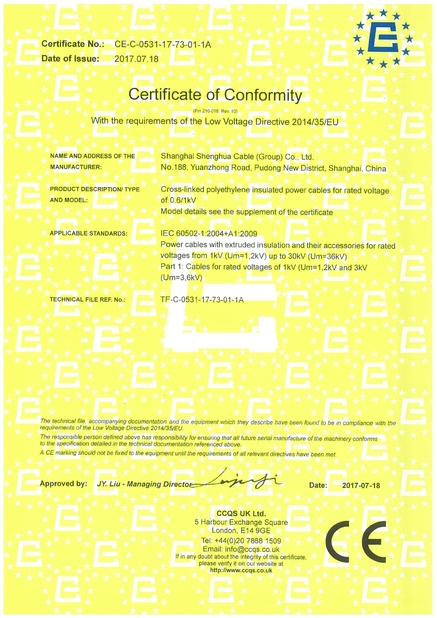
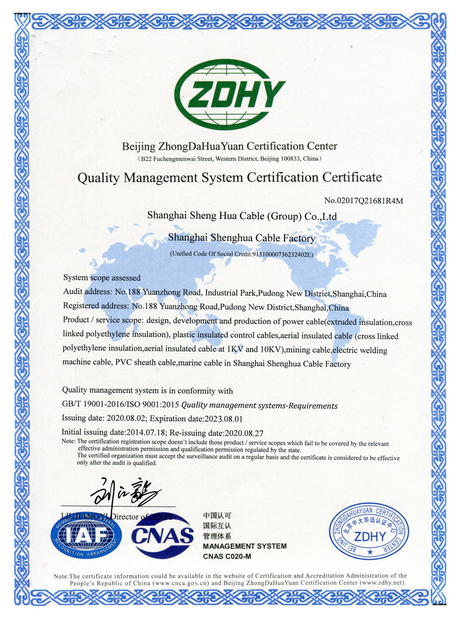
| Certification | Not implied by designation | CE, KEMA, ISO, third party test |
| Delivery form | Not implied | Drum length and packing |
Typical PVC constructions include the NYY 4x25mm2 oxygen free copper PVC cable 0.6/1 kV, the VGV 3x2.5mm2 rigid PVC insulated cable 1 kV, and the NYY and NYCY fire resistant cable for buildings. Building wire users select the BVR 1x4mm2 flexible PVC building wire 450/750 V, while distribution projects use the CYKY 5x10mm2 underground distribution cable or the armoured N2XRY 4x35mm2 wire armoured cable. Where no earth core is wanted, the NYY-O 1x300mm2 single core cable is the correct designation.
Most PVC designation systems have an aluminium counterpart, and recognising it prevents a costly misunderstanding. In the VDE tradition the metric conductor is written as NAYY or NAYY, in the Chinese system VV becomes VLV, in the CIS system VGV becomes AVVG, and in Central Europe CYKY becomes AYKY. The letter change is small, but the engineering consequence is not: because aluminium has roughly 61 percent of the conductivity of copper, the aluminium conductor must be about 1.6 times larger to carry the same current. A tender that specifies NYY 4x95 mm2 and receives VLV 4x95 mm2 has received a cable with substantially lower capacity, even though both items look like the same family on a quotation.
Aluminium versions also require different terminations, with bimetallic lugs or connectors where the cable meets copper equipment, and a checking regime because aluminium is more prone to creep at terminals. None of that appears in the designation. A buyer comparing a copper and an aluminium offer must therefore compare the current rating at the actual installation conditions and the termination cost, not the drum price alone.
The most common failure in designation control is not a wrong code in the enquiry; it is a correct code on the label that does not match the product inside. Three documents must always agree: the approved submittal, the drum label and the test certificate. The submittal states what the project requires, the label states what was shipped, and the certificate states what was tested. When all three carry the full designation, the voltage class, the cross section and the standard reference, an inspector can verify the delivery in a minute.
Where a factory uses an internal product code that differs from the project designation, the label should show both, and the quotation should carry the mapping. That single habit removes the ambiguity that later becomes a rejection, a re-order or a claim, and it costs nothing beyond a line of print on a drum.
Both are PVC insulated and PVC sheathed power cables. NYY follows the VDE tradition and VV the Chinese GB system, so sheath thickness, core colours and test requirements differ and must be compared clause by clause.
It denotes a concentric copper conductor, which provides both a protective earth path and an additional screen around the cores.
Both are single core PVC insulated building wires, but BV follows the Chinese GB system and THHN follows North American practice with a nylon jacket and different temperature ratings.
The letter R in VDE notation, the suffix 22 in Chinese notation or the letters SHV in CIS notation indicate armour. Without such markers the cable is unarmoured.
No. It is usually a thermal upgrade, but the current rating, price and standard change, so written approval and a revised calculation are required.
The suffix O indicates a cable without a green-yellow earth core, so a separate protective conductor must be provided at installation.
PVC cable designations are a compact specification, and reading them properly prevents the most expensive kind of mistake: a cable that looks right and performs wrong. Translate each code into a plain sentence, add the attributes the code leaves open, and require written approval for any substitution. That discipline makes quotations comparable and inspections quick. Shanghai Shenghua Cable Group manufactures NYY, NYCY, N2XY, N2XRY, CYKY, VV, VLV, BV, BVR, KVV and VGV constructions in PVC from 0.6/1 kV distribution cable to control and building wire, with full designation marking and a cross reference table on request. Send your tender designations through our contact page and our engineers will return the exact equivalent, the standard reference and the current rating for each line item.